Why Public Clocks Changed the Rhythm of City Life
Public clocks did more than tell time. They changed how city residents met, worked, waited, traveled, and understood punctuality before every pocket carried a screen.
Anchor the story to people, places and small decisions that still shape everyday life.
By Curio Journal
Editorial note: This article is a general cultural-history explainer. It is not preservation, legal, engineering, or transportation advice. The examples below focus on broad social patterns rather than one single city.
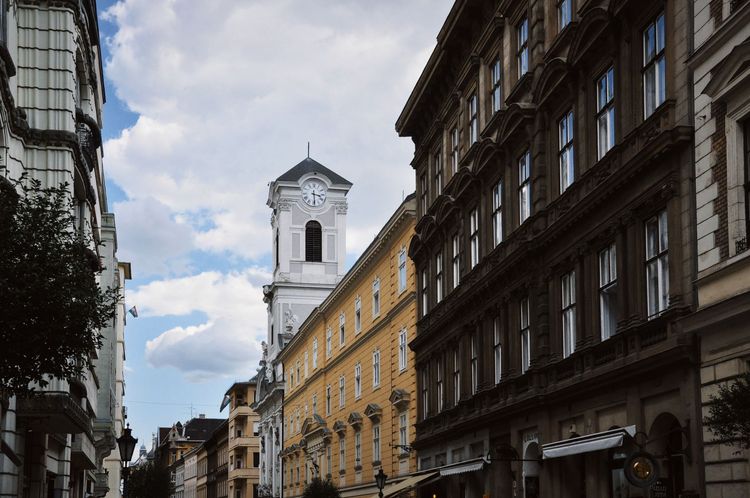
Today, a public clock may seem unremarkable. It hangs above a railway platform, sits high on a town hall, faces a market square, or appears on the front of an old bank. People glance up, confirm the time, and keep moving. The clock seems like background equipment.
For earlier city residents, though, a public clock could be part of the city’s operating system. It helped people decide when to open a stall, meet a friend, catch a train, close a shop, leave church, return from lunch, or hurry across town. Before cheap wristwatches, smartphones, and synchronized digital calendars, time was not always private. It was often something read from towers, bells, station walls, factory gates, and shop windows.
That shared visibility changed behavior. It did not make everyone perfectly punctual, and it did not erase local habits overnight. But it gave cities a more public, coordinated rhythm.
Time used to be more local than many people imagine
Modern readers are used to time feeling exact. A phone, computer, oven, car display, and train app usually agree within a small margin. That agreement can make clock time feel natural, as if every town must always have measured the day in the same way.
Historically, the picture was messier. Local time could be tied to the sun, church bells, workplace signals, household routines, and municipal clocks. A person might not need minute-by-minute accuracy to visit a neighbor, buy bread, or attend a local service. A broad part of the day was often enough.
Cities made that looseness harder to maintain. More people meant more appointments, more commerce, more transport, more wage labor, and more consequences for being late. A crowded city rewards coordination. Public clocks were one answer to that problem.
A clock made the square easier to use
Imagine a market square without a shared clock. A seller says she will meet a supplier “after the morning rush.” A buyer tells a friend to return “near noon.” A delivery person guesses when a shopkeeper will be back from a meal. These phrases can work in a small community, but they leave room for waiting and misunderstanding.
A visible clock made the square easier to coordinate. “Meet me at half past ten by the fountain” is different from “meet me later.” The clock did not have to be beautiful to be useful. It only had to be trusted enough that different people could point to the same face and organize around it.
That is one reason old clocks often appear on civic buildings. A town hall or courthouse clock was not simply decoration. It declared a public standard. Even people who did not own a personal watch could look up and borrow the city’s time for a moment.
Bells reached people who were not looking
A clock face helps people who can see it. A bell helps people who are working, walking, cooking, loading carts, or standing in a nearby street. Sound carried time across walls and corners.
This mattered because much urban life happened without a constant visual check. A worker might hear the hour while carrying goods. A shopkeeper might hear a bell from indoors. A family might shape meals or errands around a familiar sound.
Bells were not gentle background music for everyone. They could be loud, controlling, and impossible to ignore. Still, they gave time a public voice. The city announced itself, and people adjusted.
Railways made shared time more urgent
Few forces made time coordination more important than rail travel. A train cannot run on every passenger’s personal guess. Departures, arrivals, transfers, freight, crews, and station operations all depend on a shared schedule.
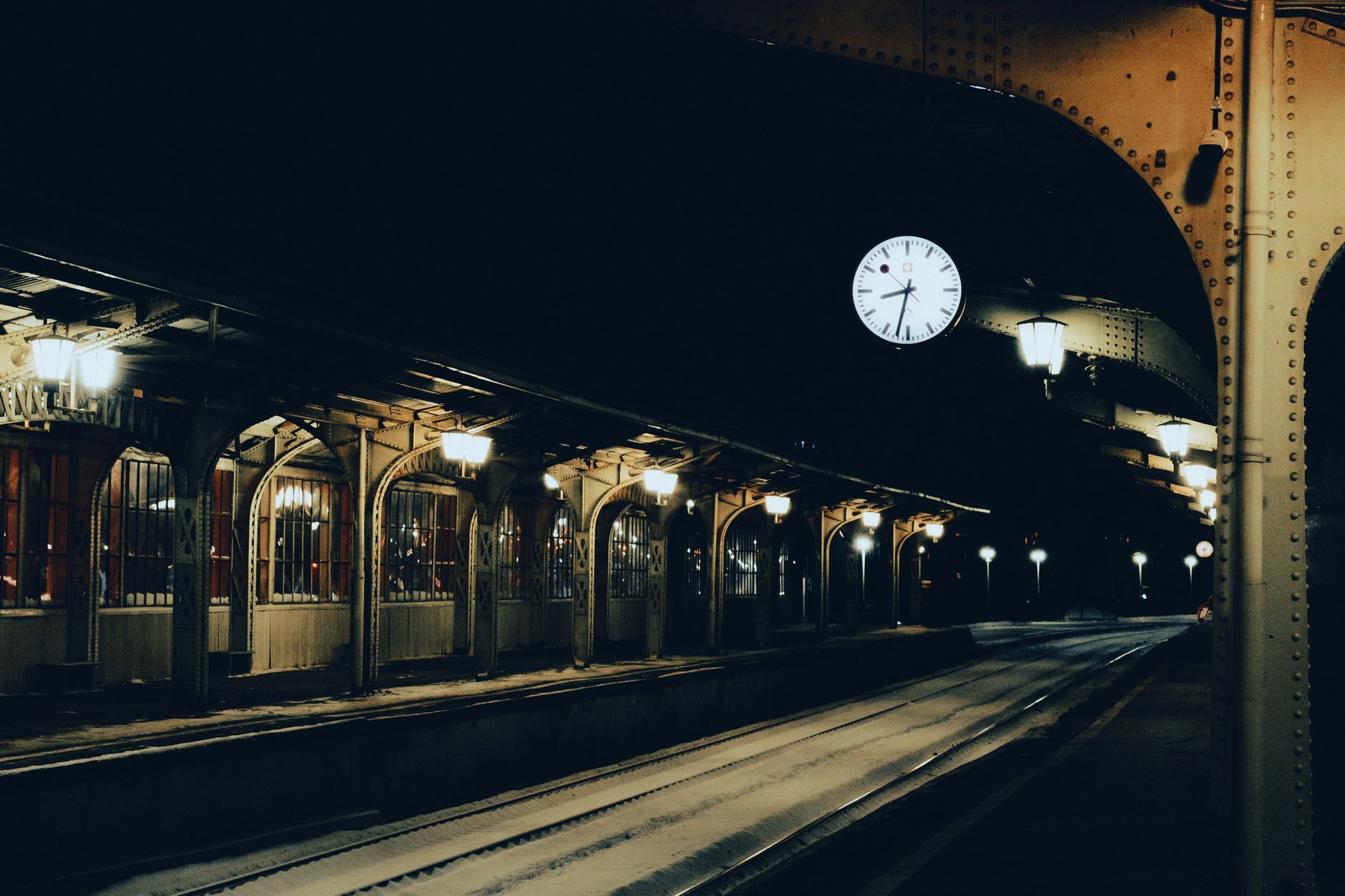
The railway station clock became a special kind of public clock: practical, authoritative, and emotionally charged. It told people whether they had time to buy a newspaper, whether a farewell was almost over, whether a worker would make the morning train, or whether a missed connection had just become a problem.
Railway time also trained people to think in timetables. The Royal Museums Greenwich explains how Greenwich Mean Time became tied to navigation, public timekeeping, and later standard time, which is useful background for understanding why railway-era clocks carried authority beyond one local street. A printed schedule and a station clock work together. The paper says the train leaves at a certain time; the clock tells you how close that moment is. That combination made punctuality feel less like a personal preference and more like a public system.
Workplaces turned time into discipline
Public clocks also mattered around factories, offices, docks, schools, and shops. When wages, shifts, openings, closings, and appointments depend on time, the clock becomes more than information. It becomes discipline.
A worker arriving at 8:05 could be judged differently from one arriving at 7:58. A school bell could divide the day into lessons and breaks. A factory whistle could make a neighborhood aware of a shift change. Even people outside the workplace felt the pattern when streets filled at predictable hours.
This is one reason clock time can feel double-edged in history. It made coordination easier, but it also made lateness measurable. It helped cities run, but it could also tighten control over workers’ lives.
Shops used clocks as a trust signal
Clocks on banks, jewelers, department stores, and shopfronts could serve another purpose: trust. A well-kept clock suggested order, reliability, and public usefulness. It invited passersby to look, even if they did not enter.
That small service could become a form of advertising without shouting. A person who checks the time at the same storefront every day begins to recognize the business. The clock makes the building part of a route. It gives the shop a small role in daily life.
Some shop clocks were practical because watchmaking, banking, and travel all had natural links to accuracy. Others simply understood that useful street furniture earns attention.
Public clocks changed waiting
Waiting feels different when time is visible. Without a clock, waiting can become vague and emotional. Has the person been gone a long time, or does it only feel that way? Is the train late, or did you misremember the schedule? Should you leave, or wait a little longer?
A public clock gives waiting a measurement. It can reduce uncertainty, but it can also sharpen frustration. Ten minutes late becomes a fact. Twenty minutes late becomes an accusation. The clock makes patience countable.
This effect still exists. People waiting under a station clock, in a hospital corridor, or outside a theater often look up more than they need to. The clock does not make the wait shorter. It makes the wait legible.
The clock became a meeting place
Many cities have a clock that functions as a landmark: under the station clock, near the clock tower, beside the big clock in the square. A clock is good for meeting because it solves two problems at once. It gives a location and a time cue.
That combination is powerful. If two people agree to meet at a clock, each can check whether they are early or late without needing another device. The clock becomes part of the social plan.
This is why public clocks appear in memory as much as infrastructure. They are tied to first dates, missed trains, school commutes, market mornings, and ordinary errands repeated for years.
Accuracy was also a maintenance promise
A public clock that shows the wrong time can be worse than no clock at all. It misleads people while wearing the authority of the city or institution. Keeping the clock accurate required maintenance, winding, repair, adjustment, and sometimes public trust after mistakes.
That maintenance is part of the story. A clock tower is not only a face and hands. It is labor. Someone had to care whether the public signal stayed useful. When old clocks stop or drift, people notice because the building has broken a promise it used to keep.
Personal watches did not immediately make public clocks useless
As pocket watches and wristwatches became more common, public clocks did not disappear. They remained helpful for people without watches, for checking a personal watch, for travelers, for children, for workers, and for anyone whose device might be wrong.
Even today, public clocks carry symbolic weight after their practical importance has shrunk. A clock on a civic building still says something about order. A station clock still belongs visually to travel. A stopped public clock still looks neglected in a way a blank wall does not.
Technology changes the need, but not always the meaning.
What public clocks reveal about city life
Public clocks reveal that time is social. It is not only a private number on a personal device. It is also a shared agreement that lets strangers coordinate. A city needs many such agreements: where streets go, when offices open, how fares work, where markets stand, and what time the train leaves.
The clock makes one of those agreements visible. For a broader history of standard time in the United States, the National Institute of Standards and Technology provides a useful public overview of how timekeeping moved from local observation toward more standardized systems. It says: this is the time we are using here.
That simple statement can organize thousands of small actions. People leave home, open shutters, ring tills, board trains, begin classes, meet friends, and decide whether they are late.
Key takeaways
- Public clocks helped strangers coordinate meetings, work, travel, and waiting.
- Railway stations made shared time feel more urgent because schedules needed a common reference.
- Workplace clocks made lateness measurable, which helped organization but also strengthened discipline.
- A maintained public clock was a civic promise: the building offered time people could trust.
A better way to notice old clocks
The next time you see an old clock on a station, bank, church, school, or town hall, try not to read it only as ornament. Ask what kind of life once gathered around it. Who needed it? Who maintained it? Who hurried because of it? Who waited beneath it?
A public clock is a small machine for telling time, but it is also a record of coordination. It shows how cities taught people to share the day.