Why Fresh Paint Can Make a Room Feel Smaller at First
Fresh paint changes light, smell, contrast, and expectation, which is why a room can feel smaller before it feels finished.
Translate the everyday question into simple mechanisms, limits and observable details.
Why Fresh Paint Can Make a Room Feel Smaller at First
Fresh paint should make a room feel cleaner, but many people have the same first reaction: the room feels smaller. The furniture has not moved. The walls are in the same place. Still, the space seems tighter for a day or two. The reason is not one trick of the eye. It is a mix of light, contrast, smell, drying time, and the way attention locks onto a changed surface.
Curio Journal often looks at ordinary perception, from wet pavement at night to homes feeling different than the thermostat says. Fresh paint belongs in that family. A room is physical, but the feeling of roominess is partly a judgment your brain keeps revising.
Paint changes the room’s edges
A new wall color makes edges visible again. Corners, trim lines, outlets, ceiling seams, and furniture gaps stand out because the surface around them changed. When edges become more noticeable, the room can feel more bounded. The walls are not closer, but the limits of the room are easier to see.
This is especially true with saturated colors, high contrast trim, or a wall that used to blend with the ceiling. A pale room with soft boundaries can feel open because the eye does not stop sharply. Add a darker color, and the eye reads the perimeter more quickly. That can be pleasing, but it may also feel smaller at first.
Light reflection shifts more than people expect
Paint affects how much light bounces around a room. Lighter matte paint, glossy paint, and darker flat paint do not behave the same way. A color may look gentle on a small sample but absorb more light across four full walls. The room then has deeper shadows under shelves, behind furniture, and near corners.
Lighting science uses reflectance to describe how surfaces return light. The U.S. Department of Energy’s efficiency resources at energy.gov focus on lighting choices, but the same everyday idea applies at home: bulbs, daylight, surfaces, and shadows work together. Change the surface, and the whole light balance changes.

Wet paint has its own temporary look
Fresh paint can look darker, shinier, or patchier before it cures. Even when it is dry to the touch, it may not yet have its final finish. That temporary sheen can make walls feel closer because they reflect highlights unevenly. Roller marks, cut-in lines, and damp corners pull attention to the wall plane.
This is one reason a room can feel different the next morning. Daylight changes, the smell drops, furniture returns, and the finish settles. People often judge color too early, while the room still looks like a work site. Waiting a full day or two can prevent repainting a room that only needed time.
Smell makes space feel occupied
Paint smell can make a room feel physically crowded. The air seems filled, even when the room is empty. People interpret smell as presence, freshness, warning, or work in progress depending on the context. A strong odor can make a room feel less open because the air itself feels noticeable.
Ventilation matters for comfort and safety. Follow product labels, open windows when appropriate, and use fans carefully so dust does not blow into wet paint. The U.S. Environmental Protection Agency has indoor air resources at epa.gov that are useful for thinking about ventilation, especially in homes with children, older adults, or respiratory sensitivities.
Empty rooms often feel smaller than furnished rooms
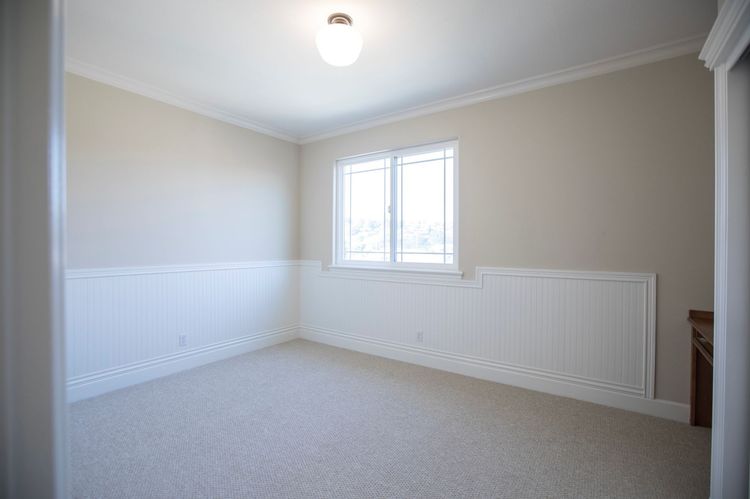
Painting usually involves moving furniture away from walls. That can make the center of the room crowded or strangely empty. Without familiar objects in their normal places, the brain loses scale cues. A sofa, lamp, rug, and bookshelf help people judge distance. Remove or cluster them, and the room can feel wrong.
This is the opposite of what many expect. An empty room should feel larger, but it can feel smaller because there is no comfortable path through it. Furniture gives the eye stepping stones. When those stones disappear, the walls become the main event.
Rugs and curtains change the judgment again. A freshly painted wall beside a rolled-up rug can look taller, colder, or more exposed than it will after textiles return. Soft materials absorb sound and break up flat color. Until they are back in place, the room may feel harder and more echoey, which people often interpret as smaller or less comfortable.
Color samples are bad at predicting whole rooms
A paint chip is surrounded by store lighting, white card, and dozens of nearby colors. A painted room surrounds you. The difference is huge. A warm beige sample may feel calm in your hand and heavy on every wall. A blue sample may look bright on paper and gray in a north-facing room.
The practical test is to paint a large sample in the actual room and look at it morning, afternoon, and evening. Put it near trim and furniture, not alone in the middle of a blank wall. The sample should answer how the color behaves with the room’s light, not whether the color is attractive in isolation.
Photographs can help, but they should not decide the color alone. Phone cameras adjust exposure and white balance automatically, so the wall in the picture may look calmer or harsher than it does in person. Use photos to compare times of day, then make the final call while standing in the room.
Why the feeling usually fades
The room may feel smaller because your attention is stuck on the newness. Every wall is asking to be inspected. After a few days, the paint becomes background again. Furniture returns, art goes back up, and the room’s normal uses take over. The color becomes part of the room rather than an event happening to the room.
Sometimes the feeling does not fade. A very dark color in a dim room, sharp trim contrast, or poor lighting can keep the space feeling compressed. That does not mean the color is wrong for every room. It means this room may need different lighting, lighter textiles, fewer visual interruptions, or one accent wall instead of four painted walls.
Ceiling color can change the effect. A wall color that stops sharply at a bright white ceiling can make the room’s height more obvious. A softer transition may feel calmer, while a high-contrast line can make the top edge of the room feel lower.
How to judge the room after painting
Wait until the paint has dried according to the label. Put furniture back before making a final call. Look at the room in the light you actually use. Stand at the doorway, sit in the main chair, and walk the path you take every day. A color that looks dramatic from the doorway may feel comfortable from the sofa.
The room is not just walls. It is light, furniture, smell, movement, and memory. Fresh paint changes all of those at once, which is why the first impression can be misleading. Give the room time to become a room again before deciding it has shrunk.
Paint and perception sources
- U.S. Department of Energy: Lighting choices to save energy
- U.S. Environmental Protection Agency: Indoor air quality
- National Institute of Standards and Technology: Color and appearance measurement background